

Satispay is taking another step away from being “just” a payments app.
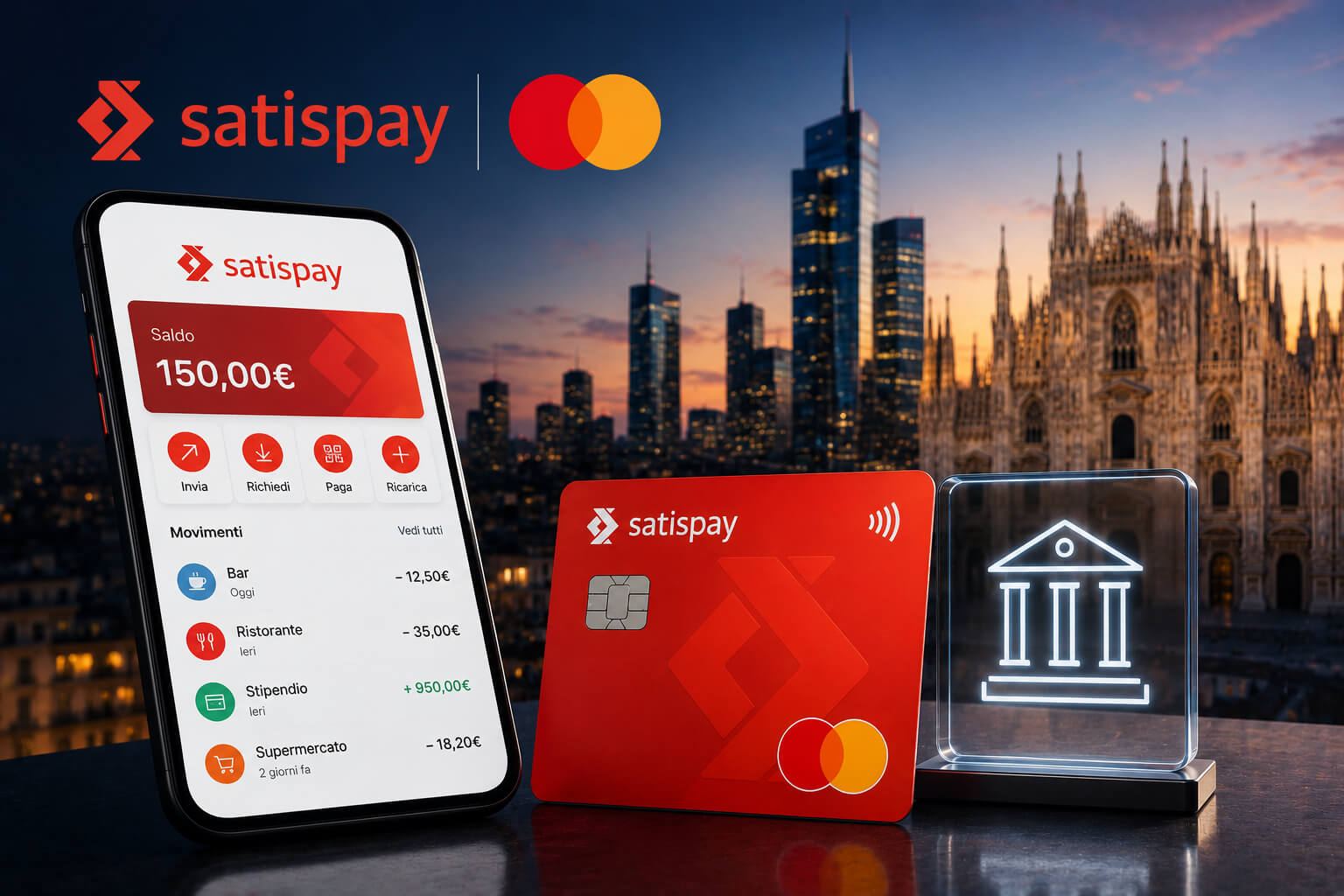
The Italian fintech has partnered with Mastercard to launch debit cards, a move that gives its users a more traditional payment option while pushing the company deeper into banking-style services. The launch follows Satispay’s earlier IBAN rollout and comes as the company tries to turn its popular payment app into a broader financial platform.
That shift is not subtle anymore. Satispay wants to be used not only when someone sends money to a friend or pays at a shop, but also when they manage more of their financial life inside one app.
Satispay Adds Debit Cards Through Mastercard Partnership
The new debit cards will be issued in partnership with Mastercard, allowing Satispay users to pay beyond the app’s existing merchant network. That matters because Satispay built much of its appeal around low-cost digital payments, especially in Italy, but card access gives it a wider reach.
Mastercard said the partnership supports Satispay’s move toward banking, with the Italian super app adding debit cards after introducing IBAN functionality. The company also reported annual recurring revenue of €120 million for the first half of 2026 and said it now has around 6.5 million users.
For Satispay, the debit card is less about copying banks and more about filling a gap. Users may love app-based payments, but cards are still everywhere. Online shops, travel, subscriptions, international payments, unexpected checkout moments. A fintech app without a card can feel incomplete.
A Payments App Trying to Become a Financial Super App
Satispay’s bigger play is becoming clearer. Payments were the entry point. Banking tools are the next layer.
The company has already expanded into savings-style features, welfare services, IBAN accounts, and now cards. It is also moving into investments, including access to stocks and ETFs directly inside the app, according to reports on the new product rollout.
That puts Satispay in the same broad conversation as Revolut, N26, and other European fintech platforms trying to own more of the customer relationship. Not all of them are doing it in the same way, though. Satispay’s roots are more local, merchant-focused, and heavily tied to everyday Italian payment habits.
That could be a strength. Or a limitation. Maybe both.
Why Mastercard Matters Here
Mastercard gives Satispay global payment acceptance, which its own closed-loop network cannot fully provide on its own.
That is the practical side of the partnership. Satispay can keep its app experience and local brand identity while using Mastercard’s infrastructure to make the card work across a much larger payment environment.
It also says something about where fintech partnerships are heading. Card networks are not just defending old payment rails. They are becoming the bridge fintech companies use when they want to scale from domestic app usage into broader financial services.
Satispay gets reach. Mastercard gets deeper access to a fast-growing European fintech user base.
Satispay’s Growth Comes With Bigger Expectations
The timing is important. Satispay has been raising capital to expand beyond payments, with earlier reports saying the company was seeking up to €120 million to support new services such as stocks, ETFs, pension products, and welfare offerings.
Once a fintech starts offering cards, investments, IBANs, and financial products, the expectations change. Users begin comparing it less with a simple payment app and more with a bank alternative.
That brings opportunity, but also pressure. Product reliability, trust, customer support, compliance, pricing, and security all become much harder to treat as background details.
Satispay Is No Longer Staying in One Lane
Satispay’s Mastercard debit card launch is not just another product update. It is part of a larger move toward becoming a banking-adjacent platform.
The company is not abandoning payments. That is still the base. But the direction is obvious now: build from daily transactions into cards, investments, accounts, and other financial services.
For Italy’s fintech market, this is a notable moment. Satispay is one of the country’s strongest fintech names, and its expansion shows how European payment apps are trying to grow before traditional banks, neobanks, and global fintech platforms crowd the same space even harder.
The card is small enough to look ordinary. The strategy behind it is not.