

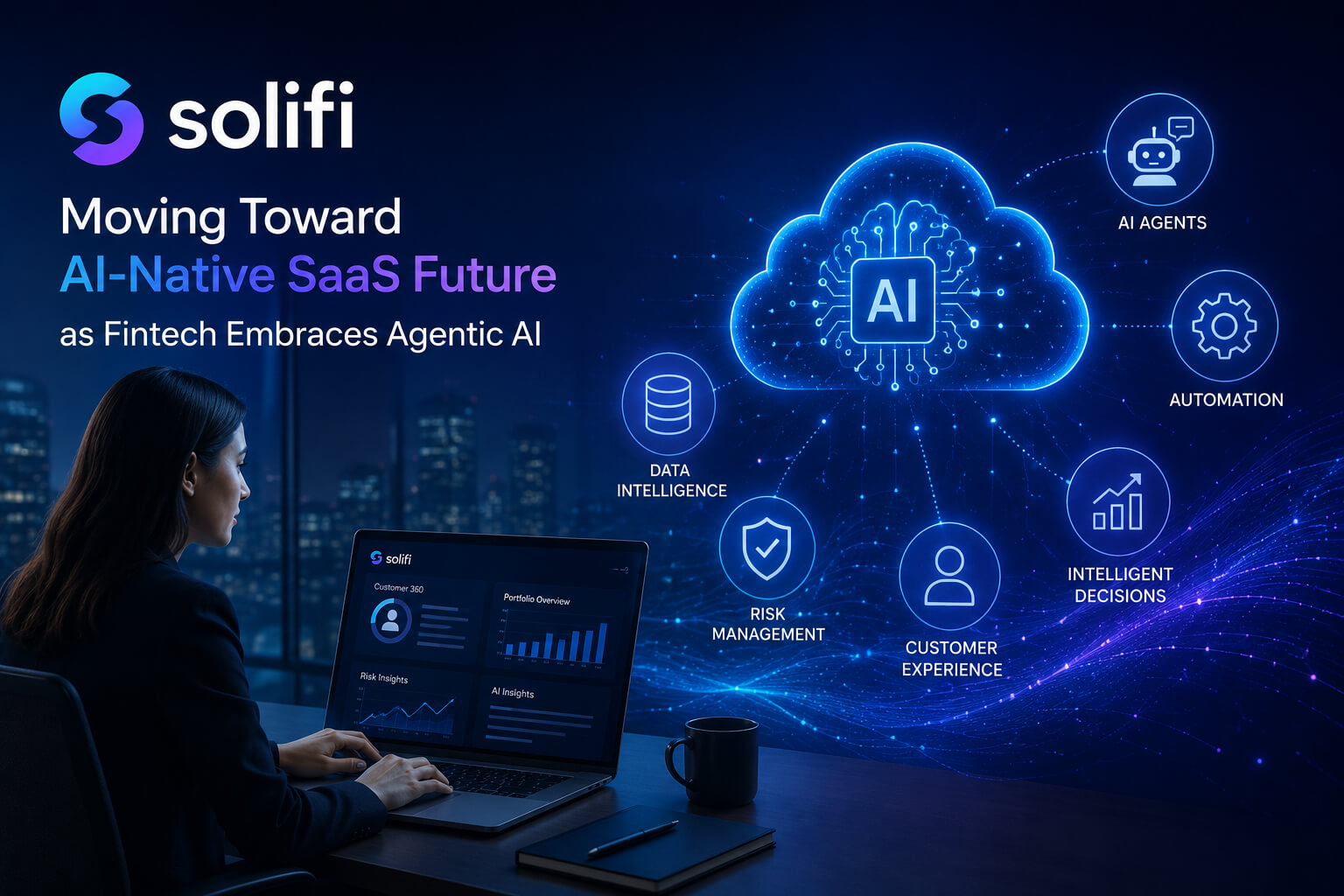
Solifi is preparing for a major technology shift as the fintech company works toward becoming an AI-native SaaS provider, signaling how artificial intelligence could reshape the future of lending technology and equipment finance platforms.
The company is not abandoning software-as-a-service. Instead, Solifi is building AI and agentic AI capabilities into its existing SaaS foundation, giving lenders a way to adopt emerging automation tools while still relying on familiar enterprise workflows.
The move comes as financial technology providers face growing pressure to modernize platforms, improve operational efficiency and respond to concerns that AI agents could eventually replace traditional SaaS tools.
Solifi Keeps SaaS as the Foundation
Solifi Chief Technology Officer Vinay Mehta said during the Solifi Summit in Austin, Texas, that the company sees SaaS as the backbone of its platform strategy. Rather than replacing SaaS with AI, Solifi plans to extend its existing systems with AI-powered tools that can support lender operations.
This approach allows lenders to continue using established workflows while experimenting with intelligent automation, agentic processes and data-driven decision-making.
For equipment finance companies and asset-based lenders, that balance is important. Many lenders rely on complex software systems for front-office and back-office operations, including origination, servicing, portfolio management, compliance and reporting.
By layering AI into these systems, Solifi aims to help lenders improve productivity without forcing a disruptive platform overhaul.
AI Infrastructure Becomes a Priority
Solifi’s AI-native SaaS strategy includes improvements across several infrastructure areas. These include data strategy, cybersecurity, API integration and workflow intelligence.
These upgrades are designed to help lenders use AI more effectively while maintaining governance, security and control. In financial services, where sensitive customer data, risk controls and compliance requirements are central to operations, AI adoption must be carefully managed.
Solifi’s plan suggests that the next phase of fintech innovation will not simply be about adding AI chatbots or basic automation. Instead, the company is focusing on deeper AI infrastructure that can support intelligent workflows and more advanced decision-making across lending operations.
What Agentic AI Could Mean for Lenders
Agentic AI refers to artificial intelligence systems that can take action, complete tasks and coordinate workflows with limited human direction. In lending technology, these tools could eventually help automate parts of underwriting, servicing, customer communication, document handling, reporting and portfolio analysis.
For lenders, the potential benefit is faster execution and lower operational friction. However, the shift also raises questions about oversight, accountability and how much autonomy AI systems should have in regulated financial environments.
Solifi appears to be taking a gradual approach. The company is currently focused on testing, product development and data-driven insights before moving toward more advanced AI systems that can communicate with each other in limited ways.
The long-term goal is to reach an AI-native model where autonomous systems can operate at scale while human teams provide governance and supervision.
Solifi’s Five-Level AI Strategy
Solifi has outlined a five-level AI implementation model. The company is currently at the third stage, which centers on testing, product development and data insights.
The first two stages focused on controlled deployment of practical AI tools. The next stage will introduce more agentic AI capabilities, including systems that can communicate with one another in limited capacities.
The final stage would position Solifi as an AI-native organization, where autonomous systems work across the platform while humans monitor performance, compliance and governance.
This staged strategy could help lenders adopt AI at a more manageable pace, especially in areas where risk, data quality and operational reliability are critical.
Why AI-Native SaaS Matters for Fintech
The rise of AI-native SaaS is becoming one of the biggest debates in fintech and enterprise software. Some industry observers warn that AI agents could reduce demand for traditional SaaS platforms by automating the tasks those systems were built to manage.
However, companies with strong proprietary data, industry-specific workflows and complex software capabilities may be better positioned to benefit from AI rather than be displaced by it.
For Solifi, the opportunity lies in combining its lending software expertise with AI tools that improve workflow intelligence. This could help the company remain relevant as lenders seek platforms that are more automated, connected and adaptive.
Lenders May Benefit From Smarter Workflows
Solifi serves asset-based lenders and equipment finance providers, where operational complexity can be high. Lenders often need to manage large transaction volumes, credit decisions, documentation, asset tracking and customer relationships across multiple systems.
AI-native SaaS could help simplify some of these processes by connecting data, automating repetitive work and surfacing insights faster.
For example, AI tools could help identify workflow bottlenecks, improve document processing, support credit analysis or recommend next actions for servicing teams. Over time, agentic AI may allow certain systems to complete routine tasks automatically while escalating higher-risk decisions to human teams.
The Future of SaaS in Financial Technology
Solifi’s strategy reflects a broader shift in financial technology. SaaS platforms are no longer expected to be static systems of record. Increasingly, fintech providers are being pushed to create intelligent platforms that can analyze, automate and adapt.
The future of SaaS in fintech may depend on how well providers can integrate AI without compromising trust, security and compliance.
Solifi’s transition toward an AI-native SaaS model shows that established fintech platforms may not disappear in the AI era. Instead, they may evolve into more intelligent systems that combine traditional software reliability with agentic AI capabilities.
For lenders, the key question will be how quickly these tools can deliver measurable improvements in efficiency, risk management and customer experience.
Bottom Line
Solifi’s move toward AI-native SaaS highlights the next phase of fintech innovation. By keeping SaaS as the foundation while adding agentic AI and intelligent workflow capabilities, the company is positioning itself for a future where lending technology becomes more automated, connected and data-driven.
As AI adoption accelerates across financial services, Solifi’s strategy could serve as a model for how fintech providers can modernize legacy workflows without abandoning the platforms lenders already depend on.