
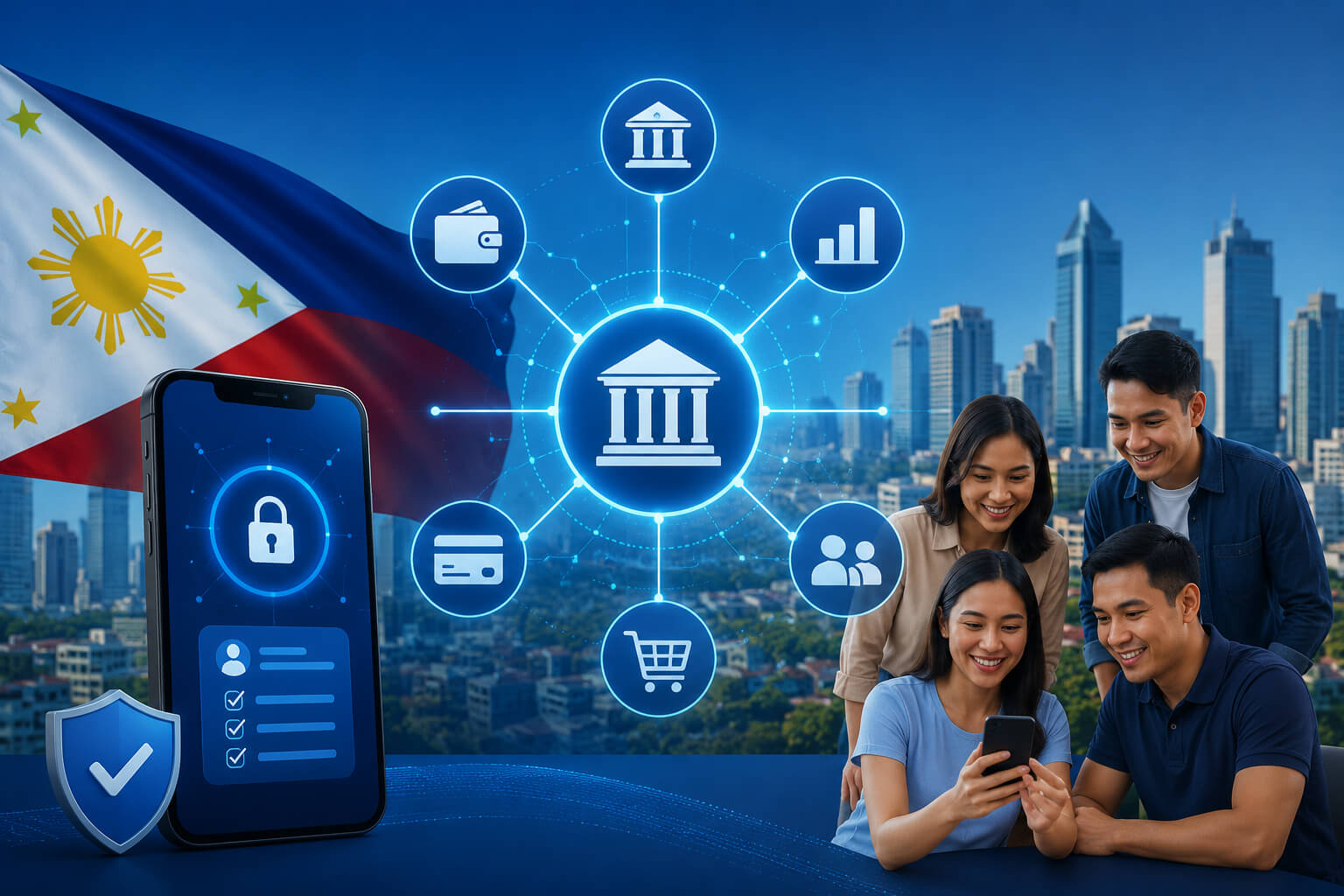
Millions of Filipinos regularly pay bills online, receive money through digital wallets and make purchases using financial apps. Yet many of them still struggle to qualify for a formal loan.
The problem is not always income. Often, it is the lack of a traditional credit history.
Fintech Alliance Philippines is now supporting a proposed law that could change how lenders assess those borrowers. House Bill No. 9149, known as the Open Finance and Consumer Data Empowerment Act of 2025, seeks to establish a legal framework for consumer-directed financial data sharing in the Philippines.
Digital Transactions Could Become Proof of Creditworthiness
Traditional lending systems usually rely on bank records, credit cards, payslips and previous loans. That works for people who already participate in the formal banking system. It does little for workers, small entrepreneurs and consumers whose financial activity happens mostly through e-wallets and other digital platforms.
The proposed open finance framework would allow consumers to authorize accredited financial institutions to review their financial and transactional records when assessing a credit application.
That could include information connected to e-wallet usage, electronic bill payments, transfers and other recurring digital transactions. Under the proposal, consumers may permit lenders to access as much as 24 months of relevant financial data for credit evaluation.
A person without a credit card may still pay utilities on time every month. A small online seller may receive steady digital payments but lack the documents normally requested by a bank. Those patterns could help lenders build a fuller picture of how someone manages money.
Not a guaranteed loan. Not a shortcut around responsible lending. But potentially a better starting point than having no usable credit record at all.
Fintech Alliance Sees a Market Traditional Lending Has Missed
Fintech Alliance Philippines said the proposed legislation could expand financial inclusion while opening new opportunities for financial service providers.
Todd Schweitzer, a board trustee of the industry group, argued that open finance could help consumers gain access to services while allowing financial companies to serve customers that established credit systems have often overlooked.
That support makes sense from an industry perspective.
Fintech companies already process large volumes of customer-permissioned transaction data. A clear legal framework would give banks, digital lenders and technology providers more certainty about how such information may be shared, transferred and used.
It could also create room for new credit products built for freelancers, gig workers, microbusiness owners and other borrowers whose financial lives do not fit neatly into conventional banking forms.
Consumers Would Control When Their Data Is Shared
Open finance does not mean that every lender automatically receives access to a customer’s accounts or digital wallet history.
The central idea is permission.
The Bangko Sentral ng Pilipinas defines open finance as the sharing of customer-permissioned data among banks, financial institutions and third-party providers to develop new financial services. Consumers decide whether an authorized provider can access their information.
House Bill No. 9149 aims to put that principle into law. Financial institutions holding the data would need to provide it when a consumer makes an authorized request through the proper system.
That distinction matters. The financial information belongs to the customer’s economic life, even when a bank, wallet provider or payment platform stores it.
Open finance tries to make that information portable rather than leaving it locked inside separate apps and institutions.
Proposed Commission Would Oversee Consumer Data Sharing
The bill also proposes the creation of a Consumer Data Commission under the Office of the President.
The commission would regulate how participating institutions collect, transfer and use consumer data within the open finance system. It would also play a central role in accreditation, technical standards and consumer protection.
A dedicated regulator could help create consistent rules across banks, fintech companies, insurers and other financial providers. Without common standards, consumers could face confusing consent requests, incompatible systems or unclear procedures for withdrawing access.
The technical side will matter just as much as the legal language. Financial institutions will need secure application programming interfaces, reliable identity verification and clear records showing when a consumer granted or withdrew permission.
Data Privacy Will Be the Hard Part
The promise of broader credit access comes with an obvious concern: financial data is sensitive.
Transaction histories can reveal where people shop, how much they earn, which bills they pay and when they experience financial pressure. Sharing more information may improve credit decisions, but it also increases the consequences of weak security or careless data use.
The Philippines already has the Data Privacy Act of 2012, which requires organizations to protect personal information and obtain specific, informed consent for data processing. The National Privacy Commission also requires appropriate security measures when personal data moves from one organization to another.
Open finance providers would still need to comply with those obligations.
Consent screens cannot become another wall of unreadable legal language. Customers should understand what information a lender wants, why it needs that information, how long access will last and how consent can be withdrawn.
There is another issue too. More data does not automatically produce fairer lending. Credit-scoring models may still contain bias, reward the wrong patterns or penalize people for transactions taken out of context.
The system will need a way for consumers to question inaccurate records and challenge decisions based on faulty data.
The BSP Has Already Started Building Open Finance Infrastructure
The legislation is not appearing from nowhere.
The Bangko Sentral ng Pilipinas issued Circular No. 1122 in 2021, establishing the country’s Open Finance Framework. The framework covers the technologies and policies that allow customers to securely share financial information with qualified financial institutions and third-party providers.
The BSP has also supported pilot initiatives that test consent-based data sharing in actual financial services.
What the proposed law adds is a wider legal foundation. It could turn open finance from a collection of regulatory pilots and voluntary industry arrangements into an enforceable consumer right.
That would give financial institutions stronger reasons to make their systems interoperable.
Small Businesses Could Be Among the Biggest Beneficiaries
Micro, small and medium enterprises often have transaction activity but limited formal credit documentation.
A neighbourhood retailer may receive hundreds of digital payments. An online seller may have regular customer transfers. A small service business may pay suppliers and utilities through electronic channels. Still, a traditional lender may see little more than an incomplete application.
Consent-driven data sharing could help those businesses demonstrate cash flow without building years of conventional credit history first.
The BSP has previously identified MSME lending as a potential open finance use case, particularly because transaction data can reduce some of the information gaps that make small-business lending difficult.
The opportunity is real, but the outcome will depend on pricing. Better data will not mean much if credit remains too expensive or loan terms stay difficult for small borrowers to manage.
Open Finance Could Change Who Gets Seen by Lenders
House Bill No. 9149 will not solve every barrier to credit in the Philippines.
Some borrowers will remain too risky. Others may lack enough digital activity to produce a meaningful financial record. Connectivity, cybersecurity and financial literacy problems will not disappear because institutions can exchange data.
Still, the proposal addresses a stubborn weakness in traditional credit assessment: people can be financially active without being visible to the formal lending system.
Open finance could make that activity count.
The larger test will be whether the framework gives consumers genuine control rather than simply creating another source of information for lenders. Done carefully, it could widen access while encouraging more competition across the Philippine fintech market.
Done badly, it could expose customers to more surveillance without delivering better financial products.
The bill’s details—and the safeguards built around them—will decide which direction it takes.
Sources
- Malaya Business Insight – Fintech backs bill to broaden credit access via open finance
- Bangko Sentral ng Pilipinas – Open Finance Philippines
- Bangko Sentral ng Pilipinas – Circular No. 1122 Open Finance Framework
- National Privacy Commission – Data Privacy Act of 2012
- GMA News Online – House bill seeks open finance data sharing to ease credit access