

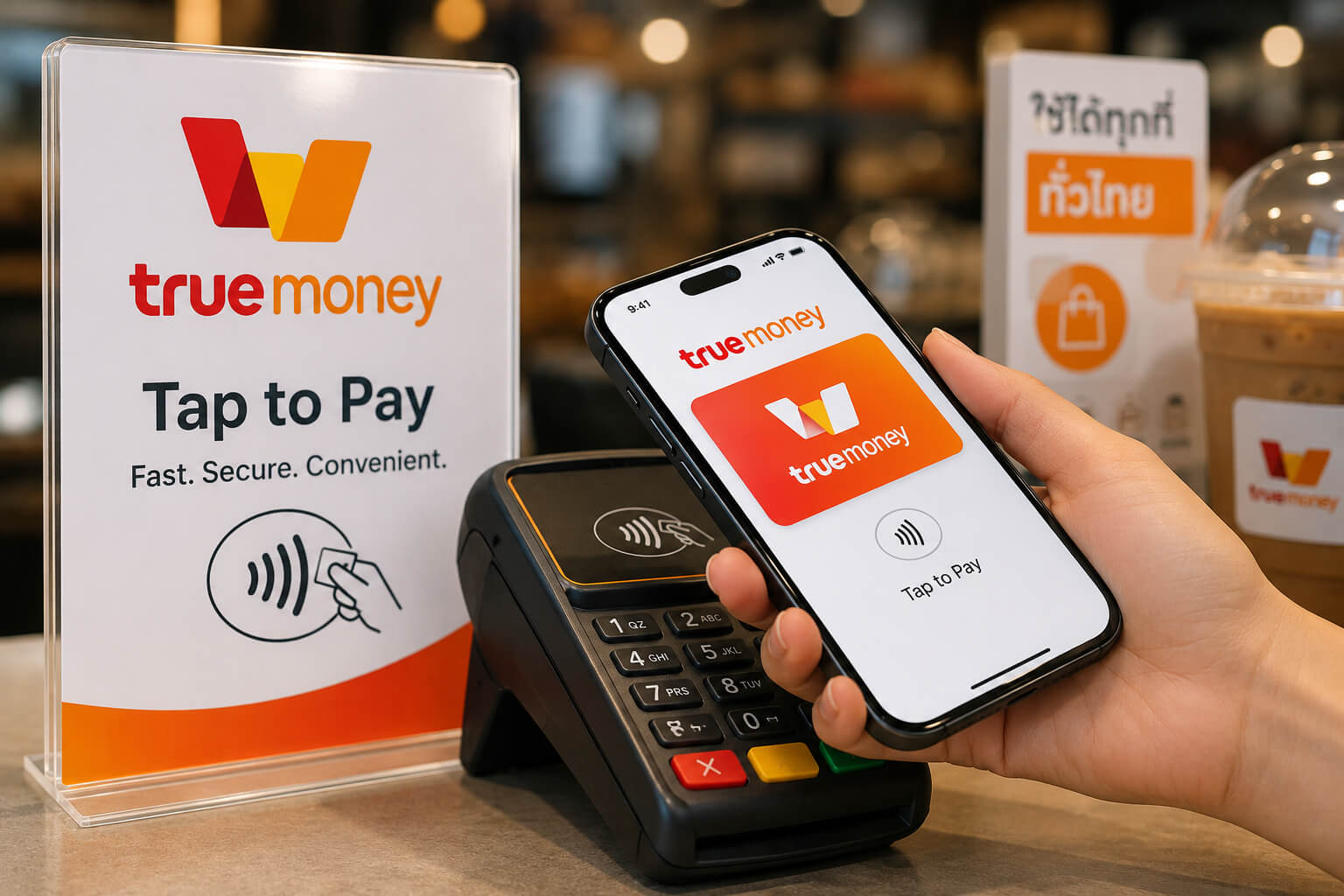
TrueMoney is pushing Thailand’s cashless payment market into a new phase with the launch of its new tap-to-pay digital payment service.
The fintech platform, operated under Ascend Money, has introduced what it describes as Thailand’s first inclusive “tap-to-pay” digital financial service. The idea is simple enough: make contactless payments easier for everyday users, especially those who do not rely on traditional credit cards.
That part matters. Contactless payments are already common in many markets, but access is not always equal. Some systems still depend heavily on bank cards, credit approval, or specific devices. TrueMoney is trying to move around that problem by bringing tap-to-pay closer to the mobile wallet user base it already has.
TrueMoney Tap-to-Pay Service Targets Wider Access
The new TrueMoney tap-to-pay digital payment service is designed to let users pay through the TrueMoney app without needing a linked credit card, according to reports on the launch. During its trial period, the feature reportedly attracted more than 1.5 million users and processed over 5 million transactions. That is not a tiny pilot. It suggests there was already real user behavior behind the rollout before the broader launch.
TrueMoney is expected to open the service through EDC machines for Android users starting July 21, 2026. For customers, that means a payment experience closer to tapping a card, but handled through the wallet app instead. For merchants, it adds another route to accept digital payments without forcing customers into one narrow payment method.
This is where the product becomes more interesting than a normal app update. Thailand already has a strong digital payment culture, especially around QR payments and mobile wallets. TrueMoney is adding another layer to that behavior, one that feels faster and more card-like but still wallet-based.
Why This Matters for Thailand’s Fintech Market
Thailand’s fintech scene is not short of payment options. QR payments, mobile banking apps, e-wallets, card networks, and cross-border wallet integrations all compete for space at checkout. TrueMoney’s move stands out because it leans into inclusion, not just convenience.
The company has more than 35 million registered users in Thailand, according to reporting around the launch. That gives the service an existing user base large enough to influence payment habits if adoption continues.
A tap-to-pay feature may sound small at first. It is not. Payments are won through tiny moments: shorter checkout time, fewer failed scans, less cash handling, fewer card barriers, and less friction when people are in a hurry. Once users get used to that kind of speed, they usually do not want to go backward.
TrueMoney Is Building Around Daily Spending
TrueMoney’s parent company Ascend Money appears to be shaping the service around everyday use rather than premium banking users alone. Bangkok Post reported that TrueMoney, under Ascend Money, rolled out the service as Thailand’s first inclusive tap-to-pay digital financial service.
That word “inclusive” is doing a lot of work here. It points to people who may not have a credit card, may not want one, or may already prefer wallets for small transactions. In markets like Thailand, where mobile-first behavior is strong, that group is not marginal. It is huge.
The bigger strategy also seems to involve more than payments. Reports said TrueMoney is focusing on seamless payment innovation, stronger partner ecosystems, more spending value, and AI-driven financial platforms. That makes the tap-to-pay launch feel less like a standalone feature and more like another step toward a broader fintech platform.
Contactless Payments Are Becoming More Normal
TrueMoney’s launch comes at a time when contactless payments are becoming less of a luxury feature and more of a basic expectation. People want payments to work quickly, especially in shops, transport-linked environments, convenience stores, food outlets, and high-volume retail spaces.
The challenge is making that speed available to more people. Credit card-based contactless systems can move fast, but they still leave out users who are wallet-first, debit-first, cash-to-wallet users, or outside traditional card relationships. TrueMoney’s approach tries to close part of that gap.
It also gives merchants another reason to support wallet-based digital payments. If customers can tap instead of scan, type, confirm, or handle cash, the checkout line moves faster. Small improvement, big effect.
A Small Tap With Bigger Fintech Consequences
The TrueMoney tap-to-pay digital payment service will not completely change Thailand’s payment market overnight. That would be too neat, and fintech rarely moves that cleanly.
But it does point to where the market is heading. Wallets are no longer just storage for digital balance. They are becoming full payment rails, loyalty channels, spending platforms, and possibly AI-powered financial hubs.
TrueMoney already has the users. Now it wants the checkout behavior too.
If the rollout works smoothly, Thailand’s contactless payment market could become less dependent on cards and more open to wallet-based tap payments. That is the part worth watching.
Sources
- Bangkok Post – TrueMoney unveils new digital payment service
- Thailand Edition – TrueMoney launches Tap and Pay and four key strategies
- Wise – How to use Alipay and TrueMoney in Thailand