

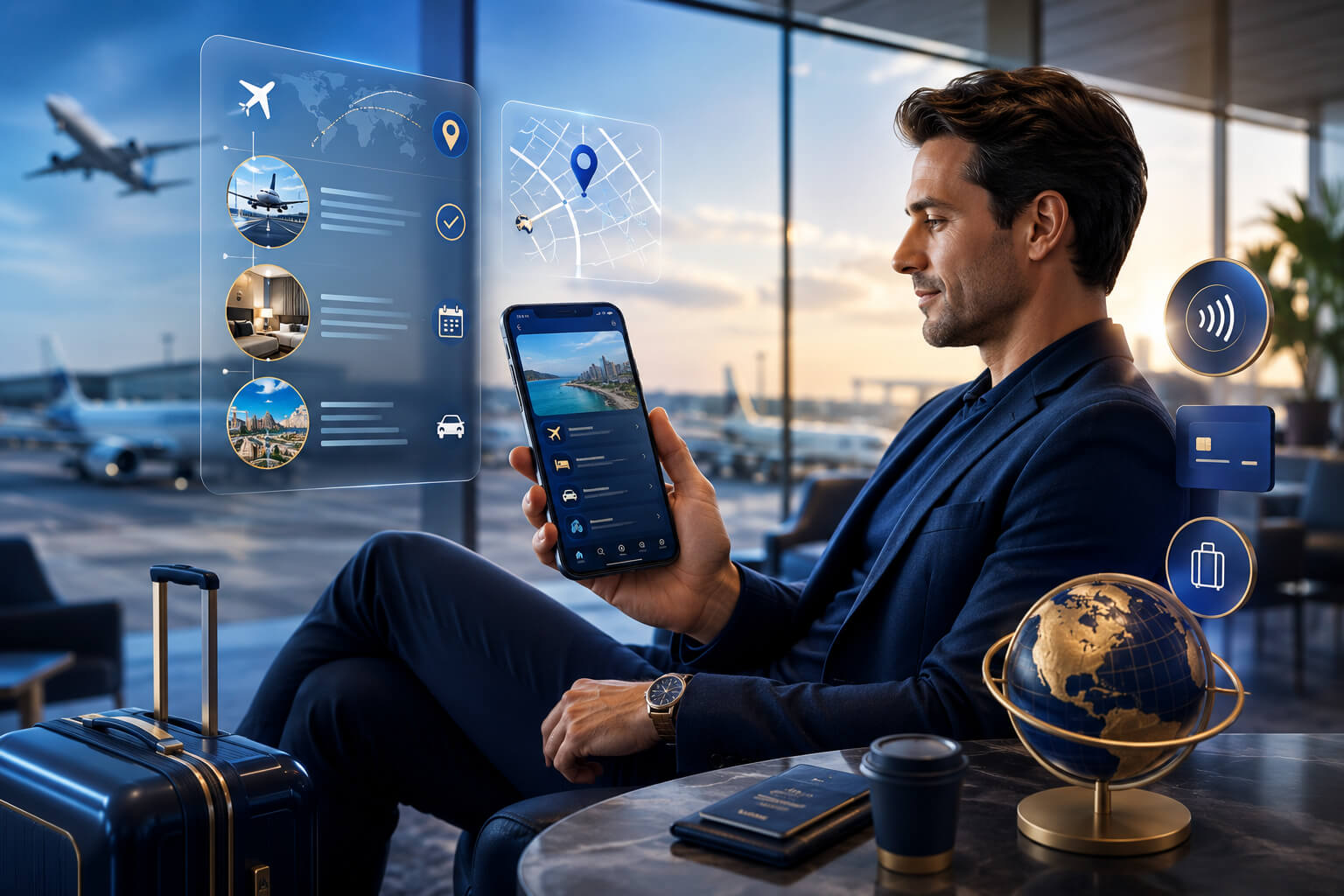
Visa does not want to be remembered only at checkout anymore.
The payments giant has launched Visa Destinations, a mobile-first travel platform designed to give cardholders access to curated experiences, local recommendations, priority entry, and selected travel perks. It is now live across 10 global locations, including Paris, London, Dubai, Milan, Rome, Mexico City, New York City, Miami, San Francisco, and Thailand, with more destinations expected to follow later in 2026.
That sounds like a travel product. It is. But it is also a fintech move.
Visa is trying to sit closer to the full travel journey, not just the final payment tap.
Visa Destinations Goes After the Experience Economy
The idea behind Visa Destinations is fairly simple. People are not only travelling to “go somewhere” anymore. They are travelling for food, fashion, music, sport, wellness, shopping, hidden local places, and the kind of experiences that make a trip feel less generic.
Visa wants its card to become part of that discovery process.
Through the platform, Visa cardholders can explore dining, entertainment, culture, hospitality, wellness, shopping, and transport offers. Some examples already listed include priority access to Top of the Rock Observation Deck in New York City and the Musée du Louvre in Paris, along with dining picks from local tastemakers.
It is not a full travel booking app. Not exactly. It feels more like Visa is placing itself between inspiration and spending, where loyalty, access, and payment data start to overlap.
Premium Cardholders Get More
Visa is also using the platform to make its higher-tier cards feel more valuable.
Visa Infinite and Visa Signature cardholders are set to receive enhanced benefits and tailored itineraries through Visa Destinations. That matters because premium card competition is no longer just about points, cashback, or airport lounge access. Card issuers and networks are now fighting over lifestyle relevance.
A card that gives access to a rare dining slot, a smoother shopping refund, or a better cultural experience can feel more personal than another percentage discount.
This is where Visa’s move gets interesting. The company is not replacing airlines, hotels, or travel advisors. It is adding another layer on top of them.
Visa Builds Travel Partnerships Around Access
Visa has named three global anchor partners for the platform: Global Blue, Star Alliance, and Trip.com Group. Global Blue is tied to tax-free shopping services, Star Alliance brings airline network relevance, and Trip.com connects Visa to digital travel booking behavior, especially in Asia-Pacific.
The Trip.com connection also fits Visa’s recent push into digital-first travel across Asia-Pacific. Visa and Trip.com Group announced a strategic partnership in May 2026 focused on combining payments infrastructure with customized travel bookings and premium cardholder benefits.
For Visa, this is not just about helping tourists find things to do. It is about staying visible before, during, and after a transaction.
Why This Matters for Fintech
Payments companies have been trying to move beyond the payment moment for years. The actual transaction is fast, invisible, and increasingly commoditized. That creates a problem. If every card works almost the same at checkout, users need another reason to care which card they use.
Visa Destinations gives Visa a reason to appear earlier in the customer journey.
Before the restaurant bill. Before the museum ticket. Before the shopping refund. Before the travel splurge.
That could make the card feel less like a payment tool and more like a travel companion, which is exactly the positioning Visa appears to be chasing. Finextra also reported that Visa’s travel offer platform is now live for users across 10 locations.
Travel Is Becoming a Payments Battleground
Travel has always been important for card networks, but the shape of that market is changing.
Travellers increasingly expect mobile-first planning, smoother cross-border payments, and benefits that match the reason they travel. Visa research cited by Karryon found that 66% of Asia-Pacific consumers intend to travel for global concert tours, while 54% plan travel around sports events.
That helps explain why Visa is leaning into experiences. Concerts, sports, fashion, food, and culture are all spending moments. They are also loyalty moments.
If Visa can connect those moments through its cardholder base, it can give banks, merchants, travel platforms, and experience providers a stronger reason to work inside its network.
Visa Wants the Card to Do More Than Pay
Visa Destinations shows where payment networks may be heading next.
The card is no longer just a plastic or digital credential used at the end of a purchase. It is becoming an access point. A travel guide. A loyalty tool. Maybe even a discovery channel.
Not every traveller will care. Some just want a cheap flight and a hotel that does not disappoint. But premium travellers, experience-led travellers, and mobile-first consumers may see more value in this kind of platform.
For Visa, the goal is clear enough: stay useful even when nobody is actively paying.
That is the bigger fintech story here.