

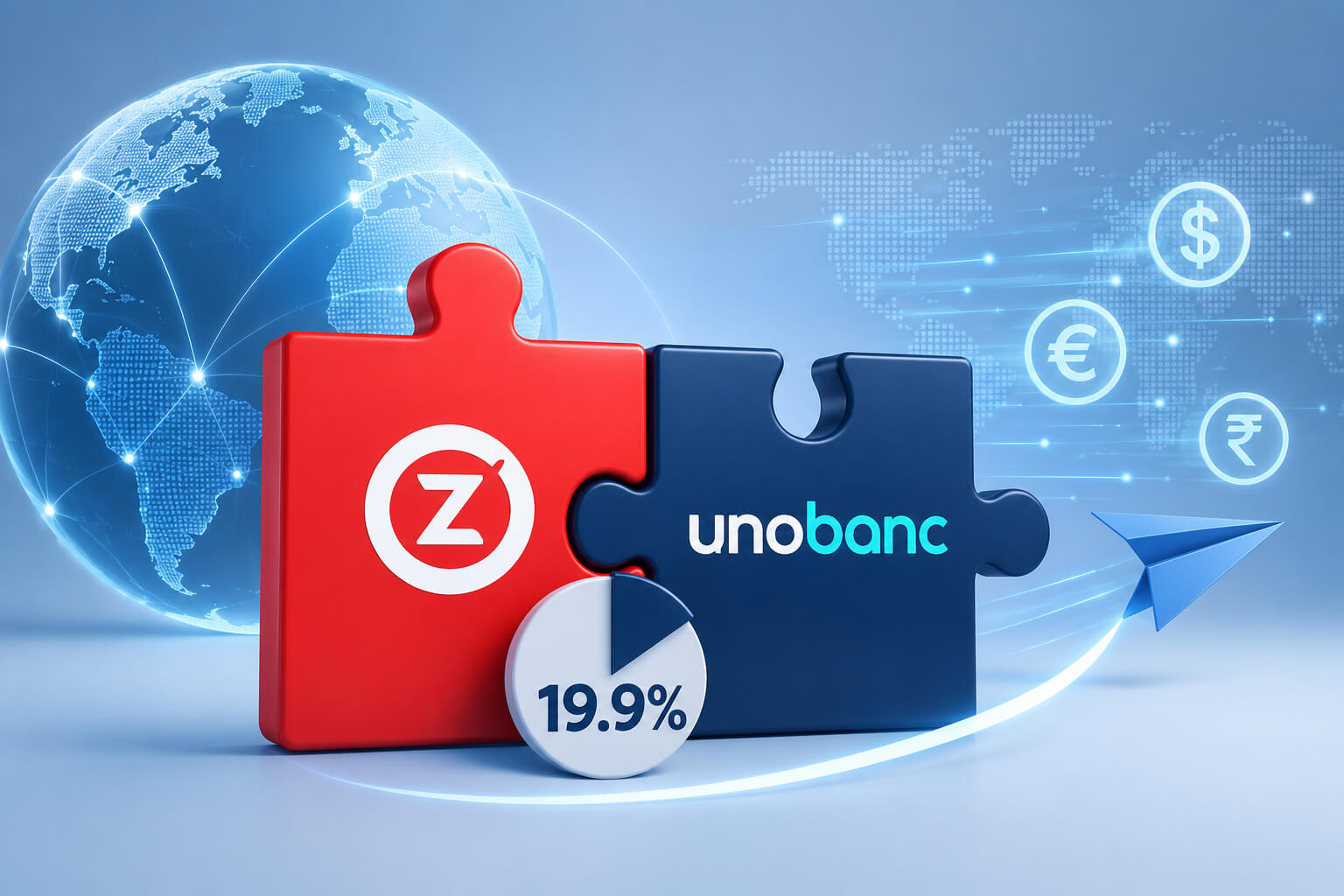
Zaggle is making a move beyond its familiar territory of corporate spend management.
The Indian fintech company has approved an investment of up to ₹7.97 crore, roughly $825,000, in Unobanc Private Limited. Once completed, the transaction will give Zaggle as much as a 19.9% equity stake in the cross-border payments company.
It is a minority investment, not a full takeover. Still, the direction is fairly obvious. Zaggle wants a stronger position in international payments, foreign exchange and remittances, areas that sit naturally beside its existing business payment products.
The deal remains subject to definitive agreements and is expected to close within 90 days of the board approval announced on July 21, 2026.
Zaggle Moves Beyond Domestic Spend Management
Zaggle built its business around spend management tools for companies. Its platform covers employee benefits, expense tracking, payment automation, rewards and other software-led financial services.
Cross-border money movement opens a different lane.
Rather than building the entire infrastructure internally, Zaggle is buying into a company that already operates in the space. Unobanc provides the payment technology behind moneyHOP, a platform focused on international remittances and education-related overseas payments.
That gives Zaggle a faster route into a market where banking relationships, compliance systems, foreign exchange processes and payment corridors take time to establish.
The company said the transaction should strengthen its capabilities in cross-border payments, forex and remittances. It also expects the investment to help it provide more financial products to both corporate and retail customers outside India.
What Unobanc Brings to the Deal
Unobanc was founded in 2019 and operates as a subsidiary of Hop Financial Solutions. Its infrastructure powers moneyHOP, which provides cross-border remittance services to Indian customers.
The platform has developed products for international tuition payments and other overseas transfers. It also offers remittance infrastructure through APIs, allowing other companies to integrate international money-transfer services into their own platforms.
That infrastructure may be the more interesting part of the deal.
Zaggle is not simply investing in another consumer-facing remittance app. Unobanc has technology that could support embedded cross-border payment services for banks, fintech companies, businesses and digital platforms.
moneyHOP says its HOPRemit service supports transfers from India to more than 60 countries. FinTech Futures also reports that the wider platform serves more than 60,000 customers and facilitates payments across markets including the United States, Canada, Australia, New Zealand, Singapore, the United Kingdom and parts of Europe.
Cross-Border Payments Fit Zaggle’s Expansion Plans
The Zaggle Unobanc investment fits a wider expansion push already underway at the company.
Zaggle has been adding products and capabilities beyond traditional employee expense cards. Its portfolio now stretches across spend management software, payment services, rewards, tax tools and payroll-related products.
The company has also been working to expand internationally. Earlier investor materials pointed to a growing global payments strategy, including an entity in India’s GIFT City and plans to develop a presence in the United Arab Emirates.
Unobanc could connect those ambitions with working payment infrastructure.
Foreign exchange and remittance services would allow Zaggle to serve customers whose spending does not stop at India’s borders. That could include companies paying international suppliers, employees travelling overseas, students sending tuition payments and consumers transferring money abroad.
Zaggle does not need to turn itself into a traditional remittance company for the investment to matter. Even a small ownership position may provide access to technology, payment networks and expertise that it can combine with its existing corporate customer base.
The Minority Stake Leaves Room for Collaboration
A 19.9% holding gives Zaggle strategic exposure without requiring it to absorb the whole business.
That matters because cross-border payments can become complicated quickly. Different markets bring different banking partners, licensing requirements, foreign exchange rules and compliance obligations. Buying a minority position limits some of the integration risk while giving Zaggle a closer relationship with an established operator.
The structure also leaves Unobanc with room to continue developing its own platform and partnerships.
For Zaggle, the immediate value may come from combining products. A business already using Zaggle for employee expenses or payment automation could eventually gain access to international transfers, forex services or cross-border payment tools through the same wider ecosystem.
There are no detailed product integration plans yet. The companies have mainly described the deal as a way to bring their complementary strengths together and create more connected financial services.
That language is broad. The commercial logic is less vague.
Zaggle Is Building a Wider Fintech Platform
Zaggle has grown well beyond prepaid employee cards.
As of March 31, 2026, the company said it had issued more than 50 million prepaid cards through banking partners and served over 3.9 million users. Its customer network spans banking, finance, healthcare, technology and other industries.
Adding cross-border capabilities could make that existing distribution network more valuable.
The company already has relationships with businesses that manage employee spending, vendor payments and rewards through its systems. International transfers and forex products create another service Zaggle can offer to those same clients.
This is where the Unobanc investment starts to look less like a standalone financial bet and more like a product expansion move.
Zaggle gets a foothold in remittances. Unobanc gains a connection to a larger listed fintech company with corporate customers and banking relationships. Neither side needs to rebuild what the other already has.
What Happens Next
Zaggle plans to invest in one or more tranches, with the total commitment capped at ₹7.97 crore. The final ownership will be up to 19.9%, depending on the definitive agreements and completion of the transaction.
The company expects the process to conclude within approximately 90 days of the board approval.
The deal is small compared with the enormous fintech acquisitions regularly announced across global markets. Its importance lies elsewhere.
Zaggle is filling a clear gap in its product portfolio. Domestic spend management can take a company only so far when its customers increasingly operate across borders. Unobanc offers a relatively direct way into those payment flows.
The investment will not instantly turn Zaggle into a major international remittance provider. It does, however, put the necessary pieces closer together.
Sources
- FinTech Futures – Zaggle to acquire minority stake in cross-border paytech Unobanc
- National Stock Exchange of India – Zaggle investment disclosure
- moneyHOP – Cross-Border Remittance Platform
- moneyHOP – About Us
- Zaggle Investor Relations