

Samsung has spent years trying to own more of the experience around its phones.
The device, the software, the wallet, the subscriptions. Now it wants a place on the actual card people pull out when they pay.
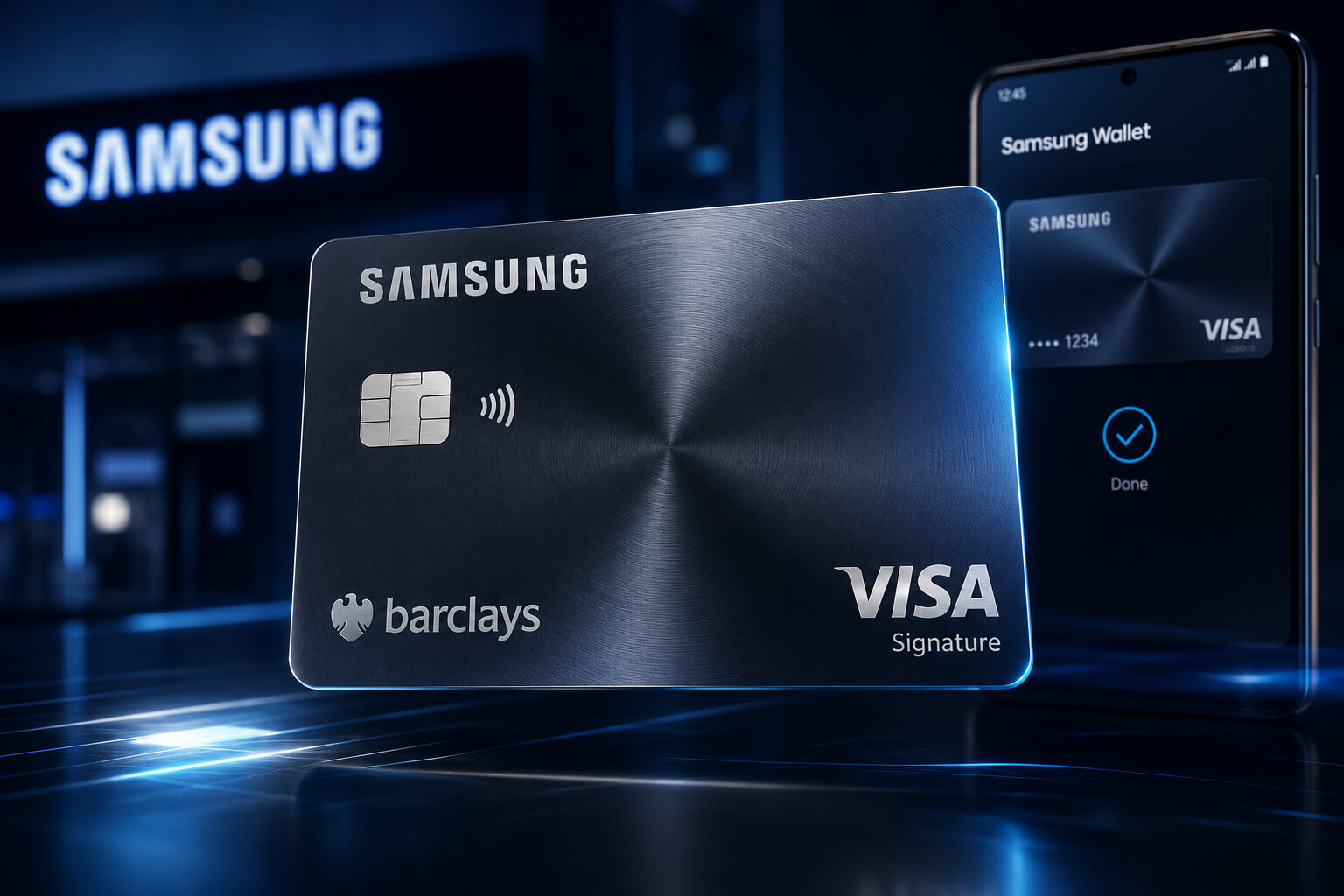
The company has launched the Samsung Galaxy Card, its first credit card in the United States. Barclays US Consumer Bank will issue the card, while transactions will run through the Visa network.
It is not a bank launch in the traditional sense. Samsung is doing something more familiar to large technology companies: building another financial product directly into an ecosystem that millions of customers already use.
Samsung Galaxy Card Brings Payments Deeper Into Its Ecosystem
The Samsung Galaxy Card is designed around Samsung Wallet rather than treating the mobile wallet as an optional extra.
Once approved, cardholders can receive a virtual version of the card inside Samsung Wallet. A premium black metal physical card will also be available for purchases where a phone is not convenient or accepted.
That wallet-first setup matters.
Samsung already controls the device and the payment interface. Adding its own branded credit card means it can now connect purchases, rewards, account management and product promotions more closely.
Barclays handles the banking side. Visa provides the payment network. Samsung owns the customer-facing experience.
It is a familiar fintech arrangement, but the scale of Samsung’s consumer ecosystem makes the launch harder to ignore.
Cardholders Can Earn Up to 5% in Cash Rewards
The strongest rewards are tied directly to Samsung.
Cardholders can earn 5% cash rewards on eligible purchases made through Samsung.com, Samsung Experience Stores, the Shop Samsung app, Galaxy Store and several other Samsung services.
Purchases completed through Samsung Wallet earn 3% cash rewards. Eligible streaming subscriptions, including services such as Netflix, Disney+ and Spotify, earn 2%.
Everything else earns 1%.
That is not a revolutionary rewards structure. Plenty of credit cards offer similar category-based rates. Samsung’s advantage is much more specific: people who regularly buy Galaxy phones, televisions, appliances or accessories may quickly find value in the higher Samsung rate.
The card also offers 20% off Samsung VIP Advantage membership, along with 5% cash rewards when customers purchase or renew that membership. Terms and eligibility conditions apply.
A $200 Bonus Gives Samsung an Immediate Hook
New cardholders can earn an additional $200 in bonus cash rewards after spending $2,000 within the first 90 days of opening the account.
Applications opened to the general public in the United States on July 22, 2026. Customers can apply online or while shopping at participating Samsung retail stores.
The timing is not accidental.
Samsung introduced the card alongside its wider Galaxy product push, giving customers another incentive to stay inside the company’s hardware and services ecosystem. A person buying a new Galaxy device may now be offered the financing, the wallet and the rewards card in the same shopping journey.
Samsung Is Following the Tech-Branded Card Playbook
The Galaxy Card will inevitably draw comparisons with Apple Card.
Both products use a technology brand to make a conventional credit card feel like an extension of a mobile platform. Both place the digital wallet near the centre of the experience. Both also use rewards to encourage spending through their respective ecosystems.
Samsung’s approach, though, leans heavily on broad product ownership.
The company does not only sell smartphones. It sells televisions, watches, tablets, laptops, home appliances and connected-home products. A credit card can link those categories together while giving Samsung another way to promote upgrades and memberships.
The card is therefore less about entering banking for its own sake.
It is about making Samsung Wallet more useful and making the wider Galaxy ecosystem more difficult to leave.
Barclays Gains Access to Samsung’s Customer Base
For Barclays, the partnership brings access to one of the world’s most recognisable consumer electronics brands.
The bank has increasingly worked with major companies to build co-branded credit products. In this arrangement, Barclays supplies the lending infrastructure, account servicing and regulatory capabilities that Samsung would struggle to build quickly on its own.
Visa completes the setup by providing broad merchant acceptance.
That division of roles is increasingly common in embedded finance. The consumer sees the technology company’s name and interface, while regulated financial institutions carry much of the machinery underneath.
Samsung gets a financial product without becoming a full retail bank. Barclays gets new card customers. Visa gains more transactions running across its network.
Everyone gets something.
Samsung Wallet Could Become More Than a Place to Store Cards
Samsung Wallet already supports payment cards, digital IDs, passes, keys and other credentials on compatible Galaxy devices.
The Galaxy Card changes the relationship slightly. Samsung is no longer only storing cards issued by other financial providers. It now has a branded product built specifically for the wallet.
Samsung says the service will also use Samsung Knox, its on-device security platform, to protect the digital experience.
Security claims will matter, although convenience may decide whether customers actually use the card. People already have plenty of reward cards. Samsung must give them a reason to move this one closer to the top of their wallet.
The 3% Samsung Wallet reward could help. So could the 5% rate on Samsung purchases.
Still, the card is most attractive to people who already live inside the Samsung ecosystem. For everyone else, it risks looking like another co-branded rewards product.
The Galaxy Card Is a Fintech Move Disguised as a Product Perk
Samsung is not trying to reinvent credit.
It is trying to control more of what happens after someone buys one of its devices.
The Galaxy Card gives the company a direct role in payments, rewards and customer spending. It also creates another bridge between Samsung Wallet and Samsung’s retail business.
That may be the real story here.
Technology companies no longer need to become banks to shape financial behaviour. They can partner with regulated institutions, place financial products inside familiar apps and make those products feel like ordinary features.
Samsung now has the phone, the wallet and the card.
Sources
- Finextra – Samsung unveils first credit card
- Samsung Global Newsroom – Introducing Samsung Galaxy Card
- Samsung US Newsroom – Introducing Samsung Galaxy Card
- Barclays – Samsung launches its first US credit card