
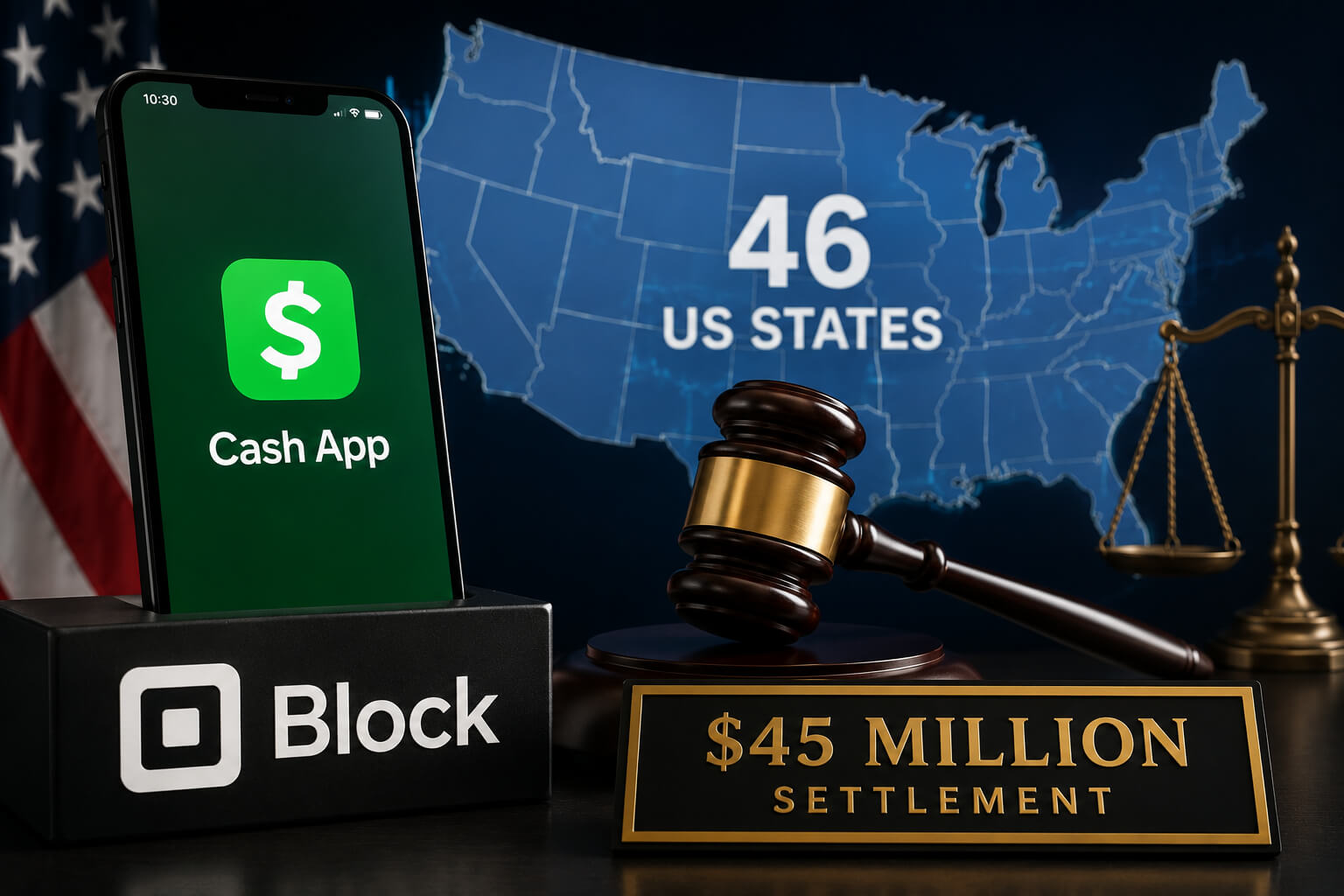
Block is paying up. Not quietly, either.
The company behind Cash App has agreed to a $45 million settlement with a coalition of 46 US states after regulators accused it of failing to properly protect users from fraud, scams, and misleading claims about the safety of its payments app.
The case puts Cash App back under regulatory pressure at a time when peer-to-peer payment platforms and financial infrastructure are being watched more closely. Fast money movement is convenient. It is also a magnet for fraud when support, identity checks, and dispute handling do not keep pace.
Cash App Settlement Centers on Fraud Protection
The settlement was announced by New York Attorney General Letitia James alongside a bipartisan group of attorneys general from 45 other states.
Their complaint was blunt. Regulators alleged that Block failed to help users when they were scammed, misled consumers about how safe Cash App was, and did not provide the fraud protection or resolution process it had promised.
That is the part that hurts the most for a consumer-facing fintech brand. Cash App was not only accused of fraud-related failures. It was accused of giving users the impression that protections were stronger than they really were.
Block denied wrongdoing and the allegations in the complaint, but the settlement still forces the company into a long list of changes.
Regulators Say Fraud Was Rising on the Platform
The attorneys general alleged that Block knew fraud on Cash App was rising sharply.
Instead of moving quickly enough to strengthen protections or warn users, regulators said the company kept leaning into growth and marketing. One concern involved account creation. The coalition alleged that one person could open multiple Cash App accounts, which made it easier for bad actors to operate networks of scam accounts.
That kind of issue matters in payments because speed can become a weakness. Money can move quickly. So can scammers.
The New York Attorney General’s office also said Cash App users who relied on the platform for direct deposits, paychecks, or government benefits were especially exposed when accounts were locked or fraud claims were not resolved properly.
Block Must Add Stronger Customer Support
The settlement does not stop at money.
Block must make changes to how Cash App handles fraud complaints, account lockouts, customer support, and marketing claims. The company is required to provide live support 24 hours a day. Human phone support must be available for at least 13.5 hours per day, while live chat support must be available for at least 18 hours per day.
That sounds like an operational detail, but for users it is a big one.
When people lose access to money or get hit by fraud, automated replies are not enough. Regulators clearly want Cash App to give users a real path to help, not a maze of support pages.
Block must also stop misleading marketing about Cash App’s safety, educate users about common scams, and meet its legal obligations to investigate fraud claims and reimburse users for unauthorized transactions where required.
Why This Matters for Fintech
This is not just a Cash App story.
The settlement shows how state regulators are getting tougher on fintech platforms that act like financial lifelines for millions of users. Apps that started as simple money-transfer tools are now used for paychecks, benefits, savings, investing, and everyday spending.
That makes the regulatory bar higher.
Users may treat these apps like bank accounts, even when the protections are not the same. Regulators are now pushing fintech firms to be clearer about that difference and more serious about fraud handling.
For Block, the message is simple enough: growth is not a defense. If a payments app becomes essential to users, regulators expect stronger safeguards around it.
Block Says It Is Investing in Safety
Block has said it shares regulators’ commitment to addressing industry challenges and continues to invest in operations and technology to support a safer financial ecosystem.
Still, this is not the first major compliance issue for the company. Last year, Block agreed to pay an $80 million fine in a settlement with 48 US state financial regulators over alleged Bank Secrecy Act and anti-money laundering compliance violations.
That history gives this new settlement more weight.
Block remains one of the most recognizable names in consumer payments. Cash App is still widely used. But the regulatory pressure around fraud, customer support, and financial crime controls is clearly not going away.
Sources
FinTech Futures: Block Agrees $45M Settlement With 46 US States