

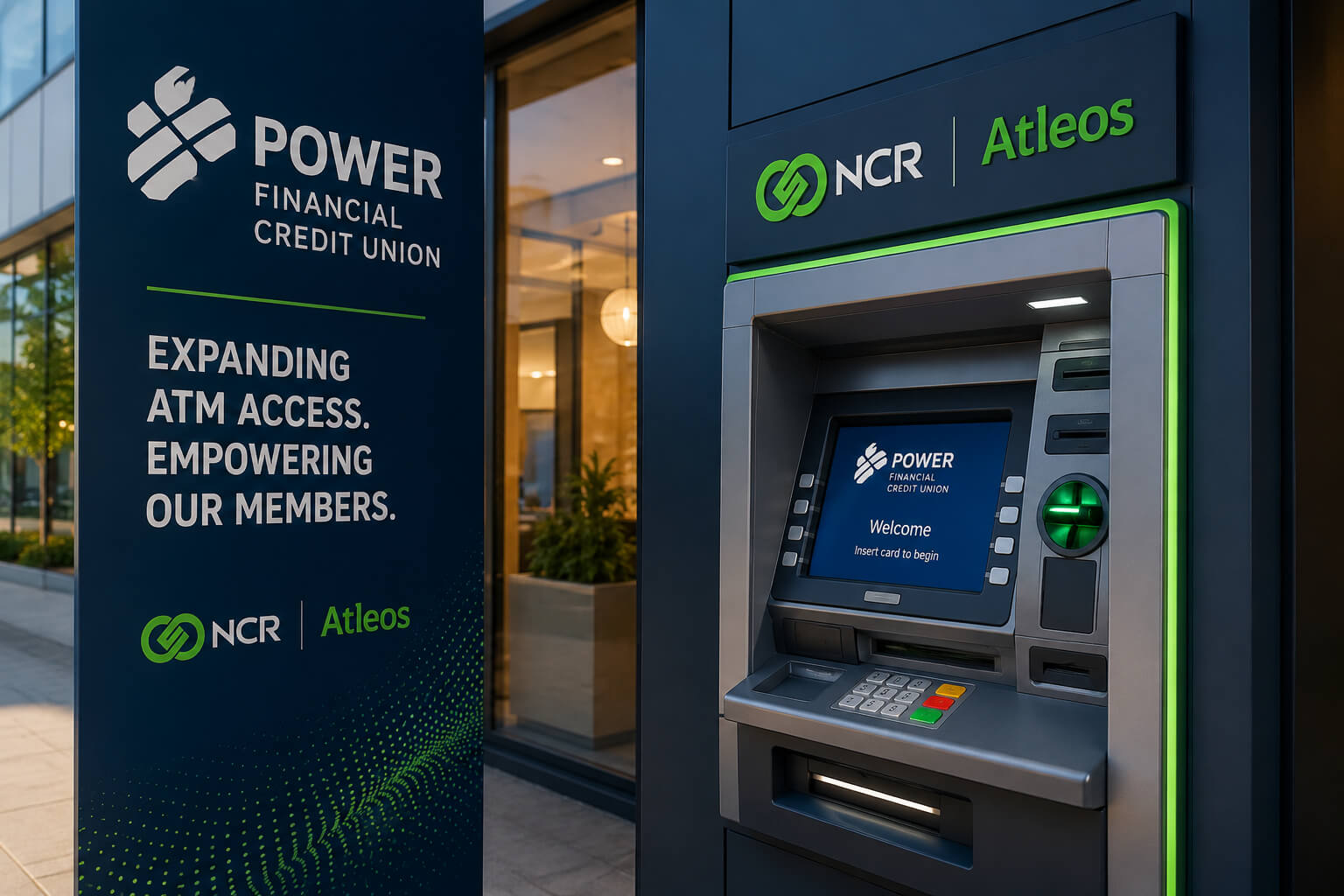
Power Financial Credit Union has partnered with NCR Atleos to expand ATM access and cash deposit services for its members, marking another move by a regional financial institution to strengthen physical banking convenience through shared ATM infrastructure.
The Florida-based credit union will now give its members access to the NCR Atleos Allpoint and Allpoint+ networks. Through the partnership, Power Financial Credit Union members can use more than 40,000 ATMs across the United States, along with 15,000 international ATM locations. Members will also gain access to around 3,500 Allpoint+ locations that support cash deposits.
Power Financial Credit Union Boosts Member Convenience
The partnership is designed to make everyday banking more accessible for Power Financial Credit Union members, particularly those who need cash services beyond the credit union’s physical branch footprint.
Power Financial Credit Union operates seven branches across Southern Florida and provides a range of personal and business banking products. Its services include checking and savings accounts, mortgages, credit cards, auto loans, personal loans, CDs, youth accounts, merchant services, business loans, payroll services, and investment solutions.
By joining the NCR Atleos network, the credit union can extend its service reach without opening additional branches. This is especially important as credit unions and community banks look for cost-effective ways to compete with larger financial institutions that already have broad ATM and branch coverage.
What the NCR Atleos Allpoint Network Offers
NCR Atleos operates one of the largest independent ATM networks in the world. Its Allpoint network allows financial institutions to offer members and customers broader cash access through a shared infrastructure model.
For Power Financial Credit Union, the deal gives members more flexibility when withdrawing cash, checking account access, or making cash deposits at supported Allpoint+ locations.
The Allpoint+ deposit capability is a key part of the agreement. While many shared ATM networks focus mainly on withdrawals, deposit-enabled locations allow customers to complete more banking tasks without visiting a traditional branch.
Why This Matters for Credit Unions
The Power Financial Credit Union NCR Atleos partnership reflects a wider shift in banking technology. While digital banking continues to grow, cash access remains important for many consumers and small businesses.
Credit unions, in particular, often serve members who value local banking relationships but still expect the convenience of a national or international ATM network. By adopting shared ATM services, credit unions can improve member experience while avoiding the high cost of building and maintaining a larger proprietary ATM fleet.
The move also supports a hybrid banking model, where digital tools, physical branches, and ATM networks work together to provide flexible access to financial services.
NCR Atleos Continues to Grow Its Financial Institution Network
Power Financial Credit Union joins a growing list of banks and credit unions adopting NCR Atleos’ Allpoint network. Recent additions have included Utah Community Credit Union and Missouri-based NBKC Bank.
NCR Atleos is also undergoing a major corporate development. The company is being acquired by The Brink’s Company in a deal valued at approximately $6.6 billion, with the transaction expected to close in the first quarter of 2027.
The Bigger Picture
The partnership highlights how financial institutions are rethinking branch and ATM strategies. Instead of relying only on owned locations, credit unions and community banks are increasingly turning to technology partners to expand reach, improve service availability, and meet customer expectations for convenient access.
For Power Financial Credit Union members, the result is broader ATM coverage, more deposit options, and greater flexibility when managing cash.
As competition in retail banking continues to intensify, partnerships like this show how regional financial institutions can use fintech infrastructure to deliver services at a much larger scale.