

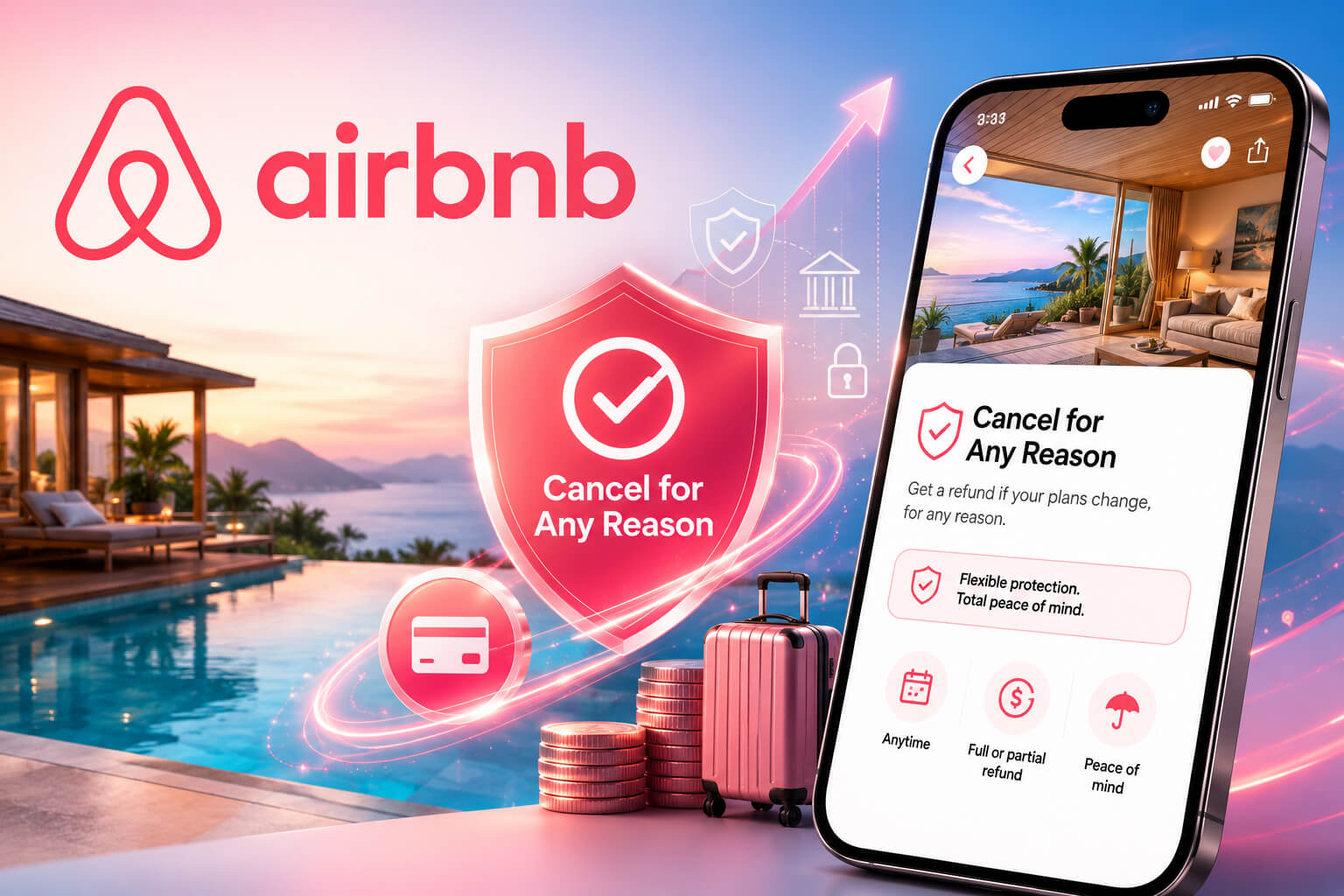
Airbnb is expanding beyond short-term rentals and into travel fintech with a new paid cancellation feature that gives guests more flexibility when booking stays.
The company has introduced an extended cancellation option that allows travelers to pay an additional fee for the ability to cancel a reservation for any reason and receive a full refund up to 24 hours before check-in. The move signals Airbnb’s growing interest in fintech-style travel products, where platforms earn revenue by selling flexibility, protection, and peace of mind at the point of booking.
Airbnb Adds Paid Flexibility for Travelers
The new Airbnb cancel-for-any-reason feature gives guests an option similar to products popularized by travel fintech companies such as Hopper. Instead of relying only on a host’s standard cancellation policy, travelers can pay extra for more control over their booking.
For guests, the value is clear. Travel plans can change because of work, family issues, weather, illness, or simple uncertainty. A paid cancellation option gives travelers more confidence to book earlier, especially for higher-value stays or trips planned months in advance.
This type of feature also fits into a broader travel industry trend. Airlines, online travel agencies, and booking platforms are increasingly offering add-ons such as flexible fares, price protection, trip protection, and cancellation upgrades. These products can improve the customer experience while also creating high-margin revenue opportunities for platforms.
A New Fintech Revenue Stream for Airbnb
Airbnb’s move into cancellation protection could become a meaningful fintech revenue stream if adoption grows. While Airbnb has not publicly disclosed the fee amount, the model gives the company a way to monetize booking flexibility beyond its core service fees.
The feature also supports Airbnb’s broader ambition to become a more complete travel platform. By adding financial-style products around bookings, Airbnb can increase its role in the travel transaction instead of simply connecting guests and hosts.
Travel fintech has become an important category because it sits directly inside the booking journey. When a guest is already making a purchase, they may be more likely to pay for extra protection or flexibility. That makes cancellation add-ons potentially valuable for companies with large booking volumes.
What It Means for Hosts
While the feature may benefit travelers, it could create new operational concerns for Airbnb hosts.
According to the reported structure, many eligible hosts are automatically enrolled in the extended cancellation option, though they can opt out. Hosts with moderate, limited, firm, or strict cancellation policies may be included by default.
Airbnb says hosts will still be paid based on their existing cancellation policies if a guest uses the paid option. However, the practical issue for hosts is not only payment. A last-minute cancellation can still create logistical problems, including cleaning schedules, revenue forecasting, calendar management, and the challenge of rebooking a property on short notice.
This is where Airbnb will need to balance guest flexibility with host trust. If hosts feel that the feature creates more uncertainty or administrative burden, Airbnb may face resistance, especially from professional operators managing multiple listings.
Why Airbnb’s Fintech Push Matters
The Airbnb cancel-for-any-reason feature shows how travel companies are increasingly blending booking platforms with fintech products. The core travel transaction is no longer just about where someone stays or how they get there. It is also about payments, risk, protection, flexibility, and customer confidence.
For Airbnb, this could be an important step toward building more add-on services around its marketplace. If successful, the company could expand into other financial products tied to travel, such as payment plans, price guarantees, insurance-style protections, or loyalty-related financial tools.
For guests, the feature may make Airbnb bookings feel less risky. For hosts, the impact will depend on how clearly Airbnb communicates the rules, how easy it is to opt out, and whether last-minute cancellations become more common.
The Bigger Picture
Airbnb’s new cancellation product reflects a broader shift in travel: flexibility is becoming something customers are willing to buy.
As travelers continue to demand more control over their plans, platforms that can offer flexible booking tools may gain an advantage. But Airbnb must manage the trade-off carefully. Too much flexibility for guests could create friction with hosts, while too little flexibility could make the platform less competitive against travel companies offering similar protections.
The launch marks an important fintech experiment for Airbnb. If the feature performs well, it could become more than a guest convenience. It could become a new revenue layer in Airbnb’s long-term strategy to build a broader travel marketplace.