

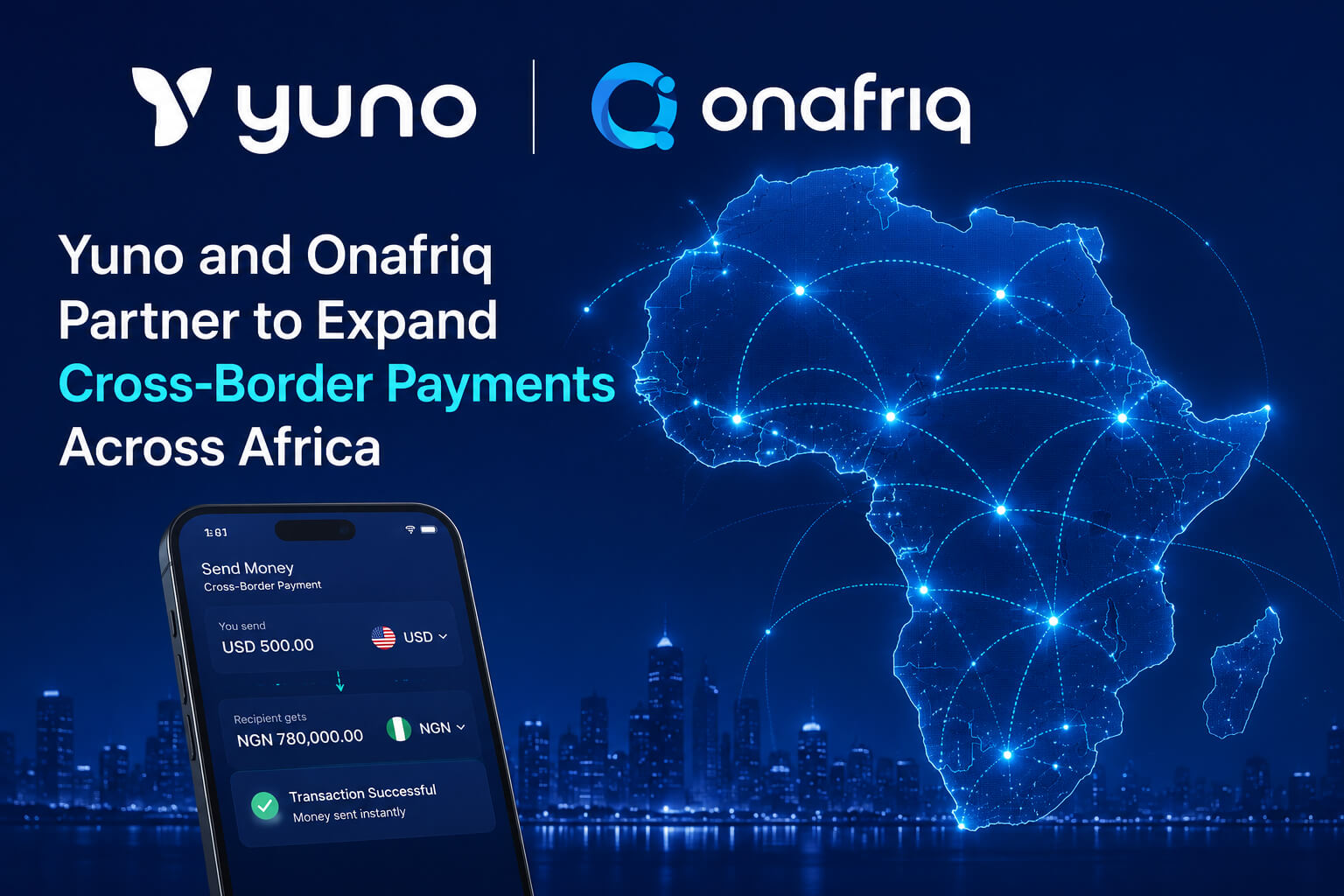
Yuno has partnered with Onafriq to expand payment access for international merchants across Africa, giving businesses a simpler way to connect with consumers and enterprises across the continent.
The new Yuno Onafriq Africa payments integration connects Yuno clients to Onafriq’s payment network through a single API. According to the companies, the partnership provides access to 43 African markets, nearly 1 billion mobile wallets, 500 million bank accounts, and 2,000 cross-border payment corridors.
A Single Route Into Africa’s Payment Ecosystem
For global businesses, expanding into Africa often requires navigating fragmented local payment systems, multiple providers, regional compliance rules, and different consumer payment habits. The Yuno and Onafriq partnership aims to reduce that complexity by giving merchants one connection point for multiple payment services.
Through the integration, Yuno merchants can send payouts to mobile wallets, bank accounts, and cash pickup locations. They can also accept payments across multiple channels without needing to build separate integrations for each market.
What the Integration Offers Merchants
The partnership supports a wide range of payment capabilities, including real-time disbursements, omnichannel collections, card issuance, treasury management, foreign exchange services, and stablecoin settlement. These services are designed to help merchants manage both incoming and outgoing payments across African markets.
Yuno clients can access Onafriq’s services directly from their main dashboard, without signing additional contracts. The integration is already operational in Egypt, Ghana, Kenya, Nigeria, Cameroon, Côte d’Ivoire, and Uganda.
Why Africa Is a Key Market for Digital Payments
Africa continues to be one of the most important regions for mobile money and digital payment adoption. Many consumers and businesses across the continent rely on mobile wallets, bank transfers, and alternative payment methods rather than traditional card-based systems.
For international merchants, this makes local payment access essential. Companies that want to sell into African markets need payment infrastructure that can support local preferences, cross-border flows, and reliable settlement.
The Yuno Onafriq Africa payments integration is positioned to help businesses reach more users while reducing the technical and regulatory burden of entering multiple African markets.
Yuno Strengthens Its Global Payment Network
For Yuno, the partnership with Onafriq supports its wider strategy of connecting merchants to regional payment methods around the world. The company has previously expanded across the Middle East, Europe, and Asia, with Africa now becoming a key growth region for its global infrastructure platform.
By adding Onafriq’s African network, Yuno can offer merchants a broader payment infrastructure layer that supports both collections and payouts across several countries.
Onafriq Gains Access to More Global Merchants
For Onafriq, the integration opens its network to more international merchants looking for a streamlined entry into African commerce. The company’s network connects mobile money operators, banks, fintech companies, and enterprises across the continent.
This partnership could make it easier for global businesses to serve African customers while also helping more users participate in the digital economy through familiar local payment channels.
A Boost for Cross-Border Commerce in Africa
The partnership between Yuno and Onafriq highlights the growing demand for better cross-border payment infrastructure in Africa. As more global merchants look to expand into the region, payment platforms that simplify local access could play a larger role in supporting digital commerce.
With one API connection, merchants using Yuno can now tap into Onafriq’s network across multiple African markets, giving businesses a faster route to mobile money, bank account payments, and cross-border transactions.
For Africa’s fintech ecosystem, the integration reflects a broader shift toward connected payment networks that can support regional growth, global commerce, and more inclusive digital financial services.