

As artificial intelligence accelerates global sharemarket gains and promises to fix the economy’s productivity crisis, a criminal underbelly is mastering the same technology to weaponise sophisticated business payment fraud.
The fast-growing anti-fraud fintech Eftsure is in the business of “fighting bad guys”, according to its American chief executive Jon Soldan.
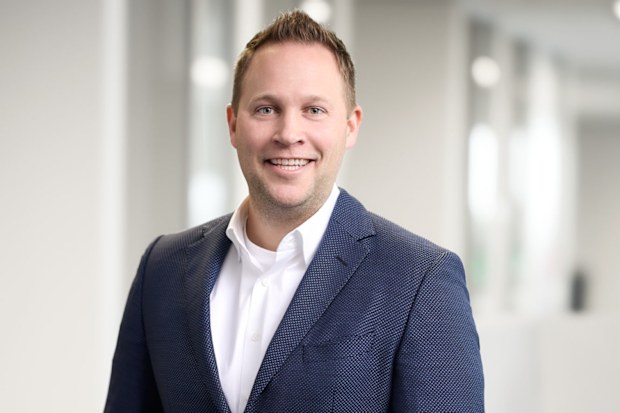
Eftsure is in its 11th year, but has tripled its revenue to $36 million in just a few years amid growing fears of AI-boosted business payment scams.
“The need to fight fraud at the same level of sophistication that the fraudsters are bringing is very high, and that market tailwind is what drives a lot of our growth,” the Utah-based Soldan says.
Australian businesses lost $30 million to scams in 2024 according to the Australian Competition and Consumer Commission, a problem chair Gina Cass-Gottlieb warns will only get worse due to AI.
British engineering group Arup lost $40 million last year after a fraudster convinced an employee to wire the funds using an AI-powered deepfake of a senior manager in a video call. Closer to home, Noosa Council lost $2 million from a similar scheme just last month.
The list of AI-driven large language models like OpenAI’s ChatGPT also includes more nefarious tools like FraudGPT and WormGPT.
“Companies aren’t equipped with the tools to solve this,” Soldan says.
In October 2025, Eftsure experienced the largest volume of fraud attempts in the company’s history.
Eftsure was founded by four Australian entrepreneurs in 2014 after one of them fell victim to a payments scam. This is the company’s third year in a row on the Financial Review Fast 100 list, ranking 43rd this year.
It now employs 410 staff and has 3500 business customers, which include Costco, Sony and 7-Eleven.
The company’s software acts like a financial bouncer standing at the door of a business’ bank account, giving its users the “all clear” to send off million-dollar payments to their suppliers.
Eftsure makes behind-the-scenes checks on the financial and digital footprint of those suppliers, digging into their internet protocol (IP) address, bank records and credit data. They may even do a phone interview.
If the supplier passes, it’s added to the white list of approved businesses. It’s not just about identifying dodgy businesses, it’s knowing the clean ones.
Australia’s banks are rolling out a similar system that tells their retail banking customers if the payment details they entered match, closely match or don’t match an entry in a centralised database.
But Soldan says it’s not helpful for businesses to know if there is a small chance their supplier is a fraudster. It needs to be 0 per cent.
“The banks are trying to solve it locally in Australia with the ‘verification of payee’ system, but it’s not enough,” Soldan says, adding that businesses require certainty, particularly for larger transactions.
Eftsure either vouches for a business, or it doesn’t. It also launched a payment guarantee in May. If the company gives a green light for a supplier which turns out to be fraudulent, they will compensate lost funds of up to $1 million. They haven’t had to use it yet. “Don’t jinx it,” Soldan says.
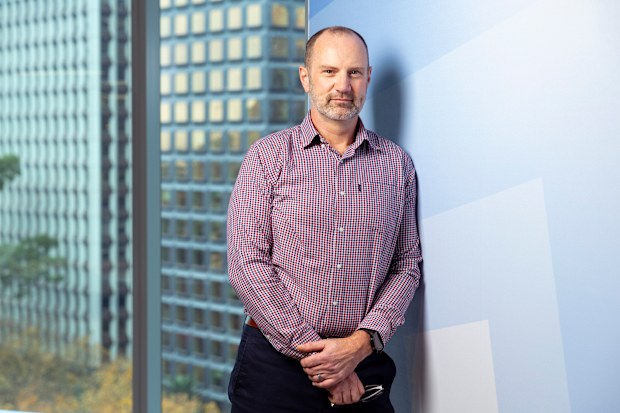
Soldan is reaching his third year as global chief executive. He says he caught the “tech bug” early in his career, going to work in senior roles at tech giant Oracle and real estate software developer RealPage. He is based in Salt Lake City, but visits Australia regularly.
“It reminds me of how the US was 15 or 20 years ago before we got too weird,” he says. “I needed more access to Tim Tams and Vegemite … the coffee alone is worth it. I can’t drink coffee here [in the US] any more.”
He says Australians are easier to talk to over the phone, and more likely to pick up compared to Americans when Eftsure’s team make cold calls.
“Our biggest challenge for growth, honestly, is just market awareness that a solution for this fraud problem exists,” Soldan says.
He says the future for Eftsure is global. They recently expanded their capacity to verify suppliers in 39 countries. The company also bought French anti-fraud company Sis ID this year, an acquisition it says makes Eftsure the world’s largest business payment protection platform.
Its global expansion grows the list of approved suppliers, which helps Australians that make overseas payments. “Our customers have been begging us all along to expand our reach to other countries,” Soldan says.
But most of Eftsure’s staff and 85 per cent of its customers are in Australia. Despite that, Soldan still sees room for growth.
“We’re not even close to exhausting the Australian market,” he says.
Stropro wants to lift structured product market
Australian investors have a lot to choose from in 2025. Do you back the tried-and-tested markets for property, equities and bonds? Or do you join the queues for gold, the ultimate financial safe haven? You could even try your hand at newer financial bets like crypto or private credit.
Stropro, a rising Australian fintech founded by ex-Citi bankers in 2019, is trying to add one more to the list: structured products.
In the United States, $194 billion in structured products were issued last year and estimates of the global market are in the many trillions.
“They are such a large market, but Australia is a bit of a laggard,” Stropro chief executive Anto Joseph says.
A structured product is an investment that combines the returns of a traditional asset like equities, with a custom derivative that allows investors to create a financial bet for the exact scenario they want.
A principal-protected note is one type of structured product that guarantees your upfront investment if the sharemarket tanks, while giving you only part of any capital gain. Your losses are capped, but so are your gains.
Stropro connects financial advisers with 11 of the biggest investment banks – which include Morgan Stanley, Citibank and UBS – so they can design the exact structured products their clients ask for.
“What we want to do is bring technology, a team and a panel of banks to that independent wealth adviser market, elevating them to the same level of sophistication that was once limited to the private banking world,” he says.
Joseph says structured products allow investors to build investment strategies on their own terms, with the level of risk that suits them.
Stropro was founded by Joseph with Rob Nicholls, Ben Streater and Abe Robertson. It now has a 12-person team and grew revenue by 311 per cent in just three years, reaching $6.5 million in 2024-25.
Joseph says their greatest challenge has been managing how Stropro links with existing wealth management platforms like NetWealth and Hub24, which advisers use to offer investments to clients and track portfolios.
“When you do things outside those platforms it becomes difficult for you to engage because they don’t want to use multiple,” Joseph says.
Stropro have integrated into those platforms over the past year so advisers can build structured products within the platform they’re already using.
The company has signed up 60 financial advisers with collectively 2000 clients. Joseph wants 400 advisers within a few years and their ultimate goal is 3000, what they estimate is the number of advisers with clients interested in structured products.
“Structured investments will be one of the most exciting evolutions in the Australian wealth management landscape,” he says. “What Betashares did for exchange-traded funds is what Stropro will do for structured products.”
Stropro estimates the market in Australia is around $30 billion, but could get to over $300 billion within the next 15 years. Over $1.6 billion in structured products are using Stropro so far.
Source: https://www.afr.com/